

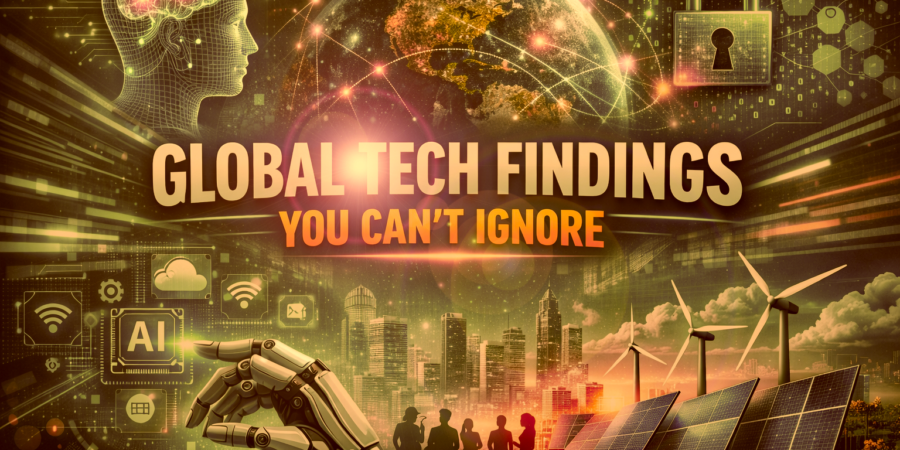
Technology is no longer just a tool—it is a global force reshaping economies, societies, and the way people live and work. From artificial intelligence to mobile connectivity, recent global technology findings reveal powerful shifts that individuals, organizations, and governments cannot afford to overlook. These findings highlight not only innovation, but also inequality, opportunity, and responsibility in the digital age.
1. Digital Connectivity Is Expanding—But Unevenly
One of the most important global tech findings is that internet access is growing faster than ever, yet remains deeply unequal. While billions of people are now connected through mobile devices, large populations—especially in rural and low-income regions—still lack reliable and affordable access.
This digital divide affects education, healthcare, business, and civic participation. Countries that invest in broadband infrastructure and digital inclusion programs are seeing faster economic growth, while those left behind face increasing inequality. Connectivity is no longer a luxury; it is a foundation for development.
2. Artificial Intelligence Is Moving from Innovation to Everyday Use
Global research shows that artificial intelligence (AI) is no longer limited to research labs or big tech companies. AI is now embedded in everyday tools—customer service chatbots, fraud detection systems, medical diagnostics, and agricultural forecasting.
However, findings also show a major skills gap. Many organizations adopt AI faster than their workforce can adapt, creating challenges around job displacement, ethics, and accountability. Countries investing in digital skills and AI governance frameworks are better positioned to benefit sustainably.
3. Cybersecurity Threats Are Increasing Worldwide
Another critical global technology finding is the rapid rise in cyber threats. Governments, businesses, NGOs, and individuals are all targets. Ransomware attacks, data breaches, and phishing scams have increased in frequency and sophistication across all regions.
Many organizations still treat cybersecurity as a technical issue rather than a strategic one. Studies show that human factors—poor passwords, lack of awareness, outdated systems—remain the weakest link.
Key insight: Cybersecurity is now a global risk, not just an IT problem.
4. Cloud and Mobile Technologies Are Powering Digital Transformation
Global findings confirm that cloud computing and mobile technologies are the backbone of modern digital transformation. Organizations are moving away from paper-based and local systems toward cloud platforms that enable remote work, data sharing, and scalability.
For developing regions, mobile-first solutions are especially transformative. Mobile banking, e-government services, telemedicine, and online learning are reaching communities where traditional infrastructure is limited.
5. Technology Is Reshaping the Nature of Work
Remote work, digital collaboration tools, and automation are redefining how work is done globally. Findings show that hybrid work models increase productivity and access to global talent, but they also raise concerns about work-life balance and digital surveillance.
At the same time, technology is creating new job categories while making others obsolete. The most resilient economies are those focusing on continuous learning and digital reskilling.
6. Ethical and Environmental Concerns Are Gaining Attention
Global technology research increasingly highlights ethical issues such as data privacy, algorithmic bias, and environmental impact. Data centers consume massive energy, electronic waste is rising, and AI systems can reinforce social inequalities if left unchecked.
There is growing pressure on governments and companies to adopt ethical tech policies, green IT practices, and transparent data governance.
Conclusion: Why These Findings Matter
The global technology findings discussed above make one thing clear: technology is shaping the future faster than policies, skills, and institutions can keep up. Ignoring these trends means risking economic exclusion, security vulnerabilities, and social inequality.
For individuals, staying digitally literate is essential. For organizations, strategic technology adoption is a necessity. For governments and NGOs, inclusive and ethical digital policies are critical.

Leave a Reply